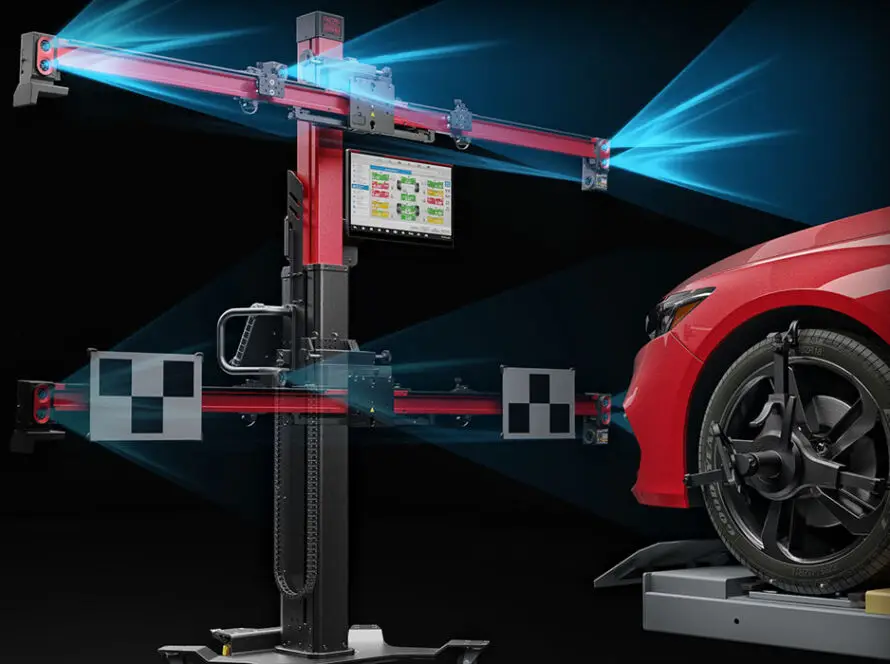
Modern vehicles are no longer purely mechanical machines. Today’s cars, trucks, and SUVs rely on dozens—sometimes more than 100—electronic control modules that communicate constantly to manage safety, performance, comfort, and emissions. When one of these modules is replaced, updated, or reset, auto module programming is required to ensure the vehicle operates correctly and safely.
This guide explains what auto module programming is, why it matters, when it is required, and how it directly impacts vehicle safety systems like ADAS.
What Is Auto Module Programming?
Auto module programming is the process of configuring, coding, or updating a vehicle’s electronic control modules (ECMs) so they properly communicate with each other and function according to manufacturer specifications.
Each module contains software specific to:
The vehicle’s VIN
Engine and drivetrain configuration
Safety and driver assistance features
Trim level and optional equipment
When a module is replaced or loses its programming, it does not automatically “plug and play.” Programming ensures the module matches the vehicle exactly and integrates into the vehicle’s network.
What Is an Auto Module?
An auto module—also known as an Electronic Control Unit (ECU)—is a small onboard computer that controls a specific vehicle system. These modules communicate through vehicle networks such as CAN, LIN, FlexRay, or Ethernet.
Common vehicle modules include:
Engine Control Module (ECM / PCM)
Transmission Control Module (TCM)
Body Control Module (BCM)
Airbag / SRS Module
ABS / Brake Control Module
ADAS Camera and Radar Modules
Steering Angle Sensor Module
HVAC Control Module
Instrument Cluster
Infotainment and Telematics Modules
Each module must be properly programmed to ensure accurate data sharing and correct operation.
When Is Module Programming Required?
Auto module programming is required in more situations than many drivers and shops realize. Common scenarios include:
Module Replacement
Any time a module is replaced—new or used—it must be programmed to the vehicle’s VIN and configuration.
ADAS-Related Repairs
Windshield replacement, collision repair, suspension work, and steering repairs often require module programming before or after ADAS calibration.
Software Updates
Manufacturers frequently release updates to address drivability issues, safety recalls, or system improvements.
Battery Replacement or Voltage Loss
Low voltage or improper battery replacement can corrupt module data, requiring reprogramming.
Warning Lights or System Faults
Persistent warning lights, communication errors, or non-responsive systems often point to corrupted or missing module programming.
The Relationship Between Module Programming and ADAS
Advanced Driver Assistance Systems (ADAS) rely heavily on precise module programming. Cameras, radar, LiDAR, and ultrasonic sensors depend on correctly coded modules to interpret data accurately.
Improper or incomplete programming can result in:
Lane keep assist malfunction
Adaptive cruise control failure
Automatic emergency braking errors
Blind spot monitoring inaccuracies
False or missing warnings
Even if a physical calibration is performed, ADAS systems may not function correctly without proper module programming first.
Steps Involved in Auto Module Programming
While the exact process varies by manufacturer, module programming typically follows these steps:
Pre-Scan Diagnostics
A full system scan identifies fault codes, communication errors, and affected modules.Vehicle Identification & Configuration
The vehicle’s VIN, options, and software version are verified.Programming or Coding
OEM-approved or professional-grade diagnostic tools upload the correct software and configuration to the module.Security Access
Many manufacturers require secure gateway access or immobilizer authorization during programming.Post-Programming Verification
Fault codes are cleared, systems are tested, and communication is verified.Calibration (If Required)
ADAS components often require static or dynamic calibration after programming is completed.
Why Proper Module Programming Matters
Incorrect or skipped module programming can lead to serious issues, including:
Safety systems not activating when needed
Vehicle failing emissions or inspection tests
Drivability problems and reduced performance
Voided warranties or denied insurance claims
Increased liability for repair facilities
Proper programming ensures the vehicle operates as the manufacturer intended and maintains compliance with safety standards.
Can Any Shop Perform Auto Module Programming?
Not all repair shops are equipped to handle module programming. The process requires:
Advanced diagnostic and programming tools
OEM software access or professional platforms
Stable power supply and voltage management
Trained technicians familiar with manufacturer procedures
This is why many body shops, glass companies, and mechanical repair facilities partner with specialists who focus exclusively on module programming and ADAS services.
Mobile vs. In-Shop Module Programming
Auto module programming can often be performed:
In-shop, as part of a larger repair process
Mobile, at body shops, dealerships, or fleet locations
Mobile programming minimizes downtime, reduces towing costs, and keeps repair workflows moving efficiently—especially when paired with mobile ADAS calibration services.
How Module Programming Protects Vehicle Safety
Today’s vehicles are designed around interconnected systems. One improperly programmed module can affect multiple safety features at once. Correct programming ensures:
Accurate sensor data
Proper system communication
Reliable safety feature activation
Long-term vehicle reliability
For drivers, it means peace of mind. For repair facilities, it means reduced comebacks and liability.
Final Thoughts: Auto Module Programming Is Not Optional
Auto module programming is no longer a specialty service—it is a critical part of modern vehicle repair. From engine performance to life-saving ADAS features, properly programmed modules are essential for safety, accuracy, and compliance.
If your vehicle has undergone repairs, module replacement, or ADAS-related work, ensuring correct module programming is one of the most important steps in returning the vehicle to the road safely.