

Module Programming
OEM Module Programming for Safe, Reliable PerformanceModern vehicles rely on dozens of interconnected electronic control modules to operate safely and efficiently. From engine and transmission management to safety systems and driver assistance features, proper module programming is essential to ensure all systems communicate correctly and perform as designed.
As vehicle technology has evolved, manufacturers have shifted from purely mechanical systems to highly integrated electronic networks. Today’s vehicles use advanced control modules to manage critical functions such as braking, steering, airbag deployment, powertrain operation, and advanced driver assistance features. When a module is replaced, updated, or reset—whether due to collision repairs, component failure, or software updates—precise programming is required to restore full functionality.
Our module programming services ensure that new or existing control units are correctly configured to manufacturer specifications. Using OEM-level diagnostic and programming tools, we synchronize modules, apply software updates, and verify system communication to help prevent warning lights, drivability issues, and safety system malfunctions. Proper module programming is a critical step in returning your vehicle to safe, reliable operation after repairs or system changes.

What are Modules?
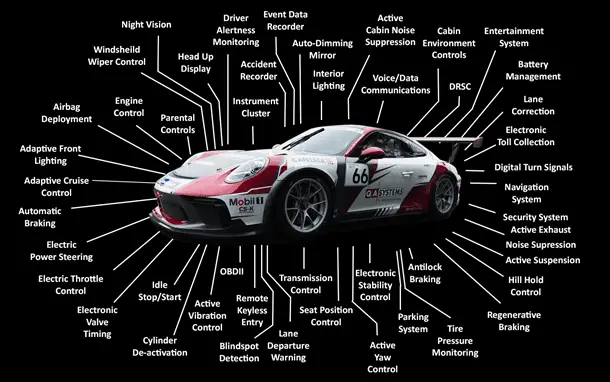
An automotive control module is an onboard computer that manages specific vehicle systems such as engine performance, transmission shifting, braking, airbags, and advanced driver assistance features. Modern vehicles rely on multiple interconnected modules to process sensor data and ensure systems communicate and function correctly. When a module is replaced or updated, professional module programming is required to restore manufacturer specifications, prevent warning lights, and ensure safe, reliable vehicle operation.
Programming Steps
A full system scan is performed to identify fault codes, communication issues, and the modules that require programming or updating.
The vehicle is stabilized with a battery maintainer and verified for proper voltage to prevent data corruption during programming.
The correct control module is identified and matched to the vehicle’s VIN, configuration, and manufacturer specifications.
OEM software is used to install, update, or reflash the module with the correct firmware and vehicle-specific data.
Vehicle options, features, and calibrations are coded so the module communicates properly with other systems.
Related systems—such as ADAS cameras, steering angle sensors, or throttle bodies—are calibrated as required.
A final scan and functional check confirm proper operation, cleared fault codes, and restored vehicle performance.
Types of Modules
Modern vehicles are controlled by a network of electronic modules that manage everything from engine performance and braking to safety systems and driver assistance features. Each module must be properly programmed and synchronized to the vehicle to ensure accurate communication, reliable performance, and safe operation. When a module is replaced, updated, or affected by repairs, professional module programming is essential to restore manufacturer specifications and prevent system faults or warning lights.
The engine control module manages fuel delivery, ignition timing, emissions systems, and overall engine performance. It processes data from multiple sensors to optimize efficiency, power, and drivability while meeting emissions standards.
The transmission control module regulates gear shifting, shift timing, and torque converter operation. Proper programming ensures smooth shifts, correct gear engagement, and long-term transmission reliability.
The body control module manages non-powertrain electrical systems such as lighting, door locks, windows, mirrors, wipers, alarms, and interior electronics. It plays a central role in vehicle comfort and convenience features.
The ABS module controls wheel speed monitoring and brake pressure modulation to prevent wheel lockup during hard braking. It supports traction control and electronic stability control functions.
The power steering module manages electric or electro-hydraulic steering assist. Proper calibration ensures correct steering feel, responsiveness, and safety system integration.
ADAS modules process data from cameras, radar, ultrasonic sensors, and LiDAR to support features such as lane keeping, adaptive cruise control, blind-spot monitoring, and automatic emergency braking. These modules often require programming and calibration after repairs or windshield replacement.
The instrument cluster displays vehicle speed, warning indicators, driver alerts, and system status information. Programming ensures accurate data display and proper warning notifications.
The HVAC control module manages heating, air conditioning, airflow direction, and cabin temperature regulation for occupant comfort.
These modules control navigation, audio, connectivity, GPS tracking, and vehicle communication systems. Programming ensures compatibility with vehicle networks and software updates.
Hybrid and EV modules manage battery systems, electric motors, regenerative braking, and high-voltage safety systems. Proper programming is essential for performance, efficiency, and safety.
The airbag control module monitors impact sensors and controls airbag and seatbelt pretensioner deployment. Accurate programming is critical to ensure proper occupant protection in a collision.